
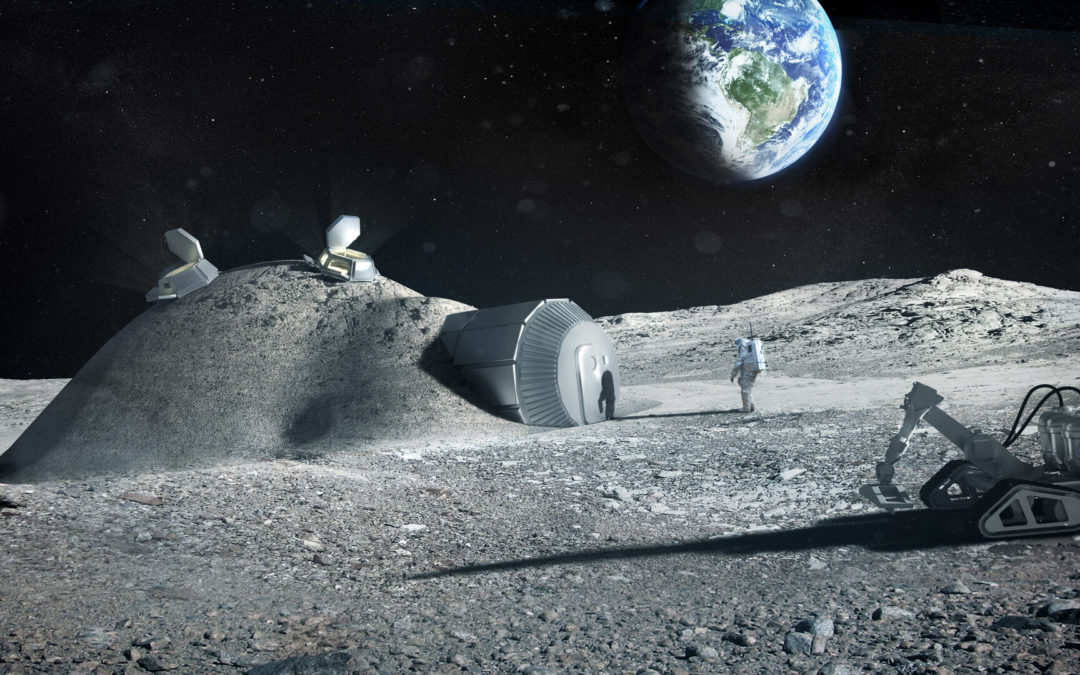
Recently NASA has announced a major change to its plans for lunar exploration and habitation. It has cancelled the Lunar Gateway, and instead is focusing on making human presence permanent.
NASA has assigned a program manager for the surface habitat, Carlos Garcia-Galan. In an interview with Payload Space, Garcia-Galan has provided the next level of detail on how habitation will be pursued. Here is the interview:
Significantly, Garcia-Galan has noted how important robots will be in the early phases: “For the first couple of phases, there’s going to be a large robotic element to be able to understand where we are. We need the presence and the shots on goal to be able to reach all the areas we want to prospect, and try out the technology that we want to try. We just don’t have enough crew missions. When you insert the human into that picture, everything gets accelerated. It’s much better, but we just don’t have enough of them. So I think that we’re going to leverage the robotic capability quite a bit, and then the crew missions will come and they will really put the infrastructure to the test.”
Some people have recognized the importance of robots for an even more important role. A seminal study was done in 1990, “Robotic Lunar Surface Operations,” that emphasized the importance of robots for installing locally-sourced shielding for habitats IN ADVANCE OF extended human presence. Because a solar storm might not wait for humans to finish installing the shielding. https://ntrs.nasa.gov/api/citations/19920011659/downloads/19920011659.pdf
I congratulate NASA on recognizing the essential nature of robots for lunar work, although Garcia-Galan seems to be focusing on using the robots for prospecting. Now it’s time to specify what ADDITIONAL tasks should be assigned to robots, such as shielding installation. Notice that the habitats in the NASA image are not shielded with regolith! New robots need to be developed to be the labor force that frees up humans for higher level tasks on the surface. Humans are expensive and delicate; like on Earth, robots need to do the dull, dirty and dangerous stuff.
Recent Comments